Our research spans several interconnected areas in fluid mechanics and transport, including the following four themes.
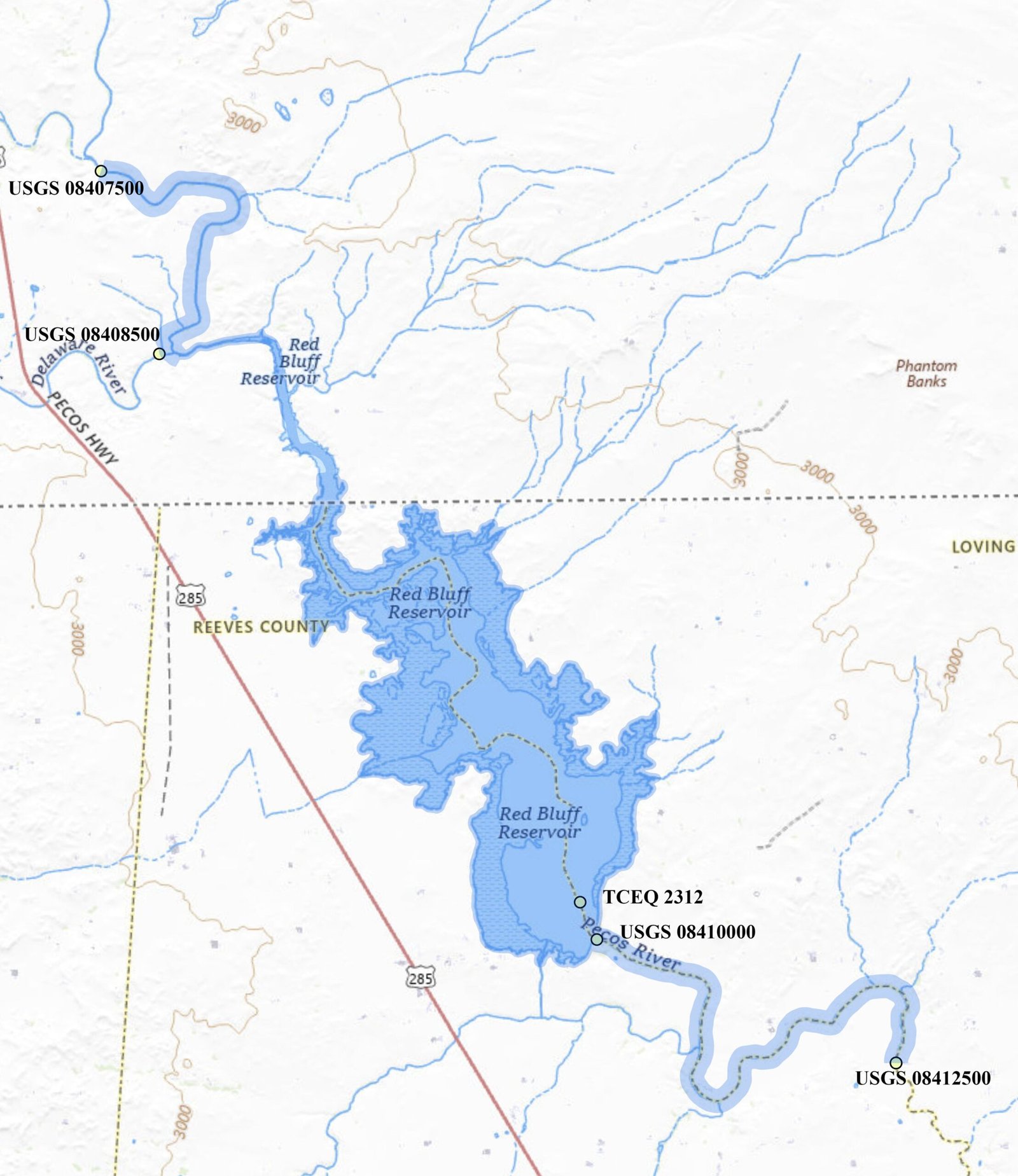
Hypersalinity in the Pecos River-Red Bluff Reservoir system of West Texas limits surface water use for irrigation and municipal supply and degrades aquatic habitat. A Delft3D Flexible Mesh hydrodynamic and water quality model of the river-reservoir system simulates flow, water level, and salinity transport, and is calibrated and validated against observed water levels and salinity. The model is used to test polished desalinated produced water as a supplemental source for lowering salinity. The scenarios vary from discharge location, rate, and timing. The aim is to find management strategies that bring salinity closer to irrigation-suitable levels without raising the risk of floodplain inundation.
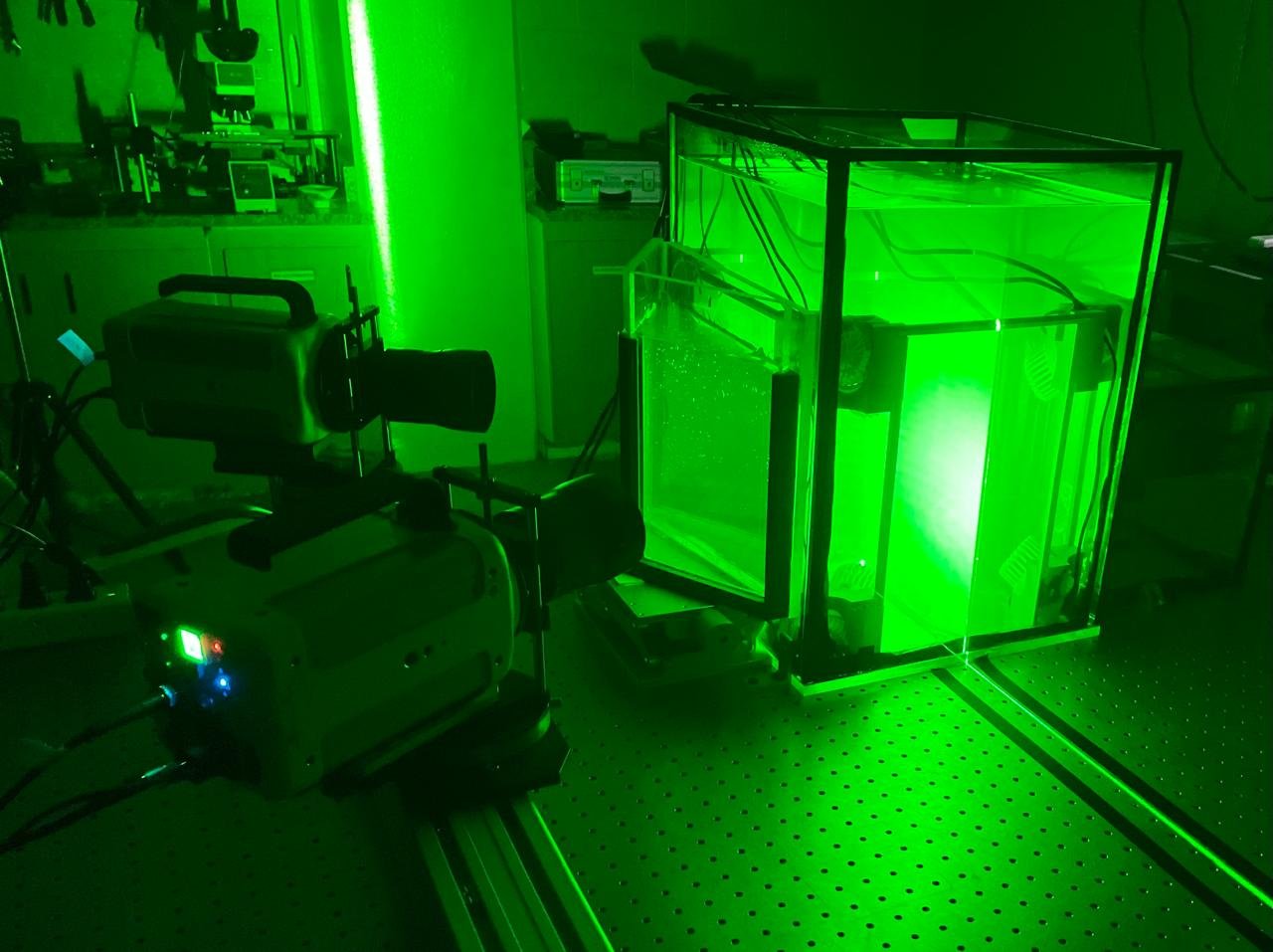
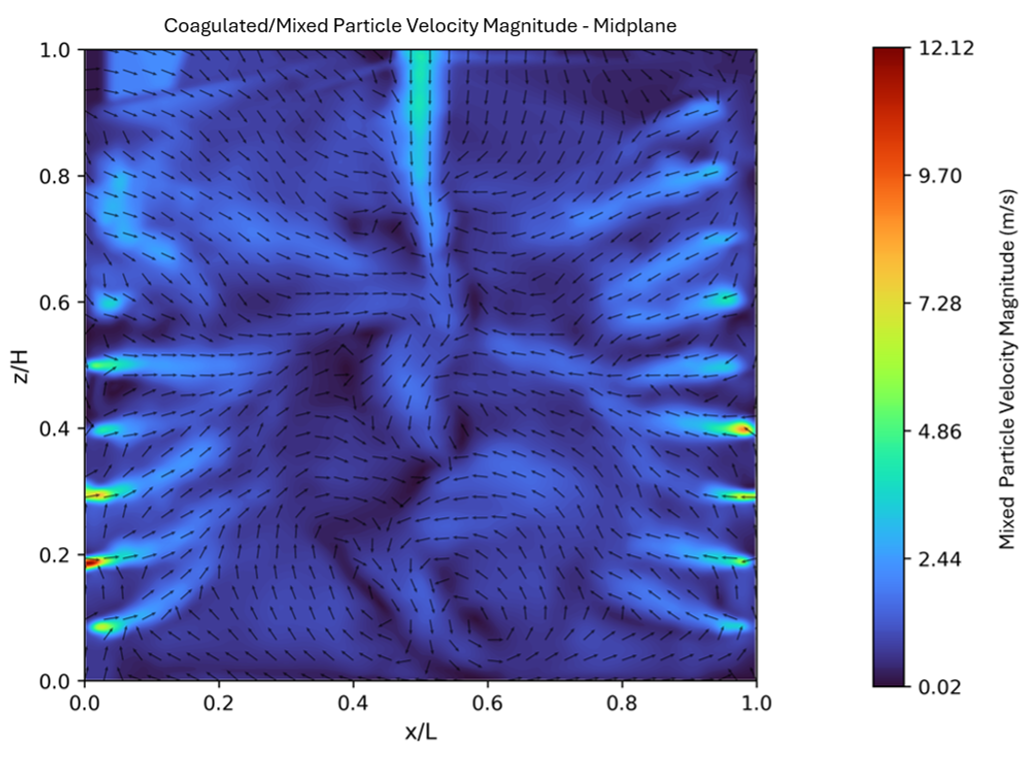
This research primarily focuses on turbulence-aerosol, studying how turbulent eddy scales and dissipation effects particle behavior, transport, dispersion and spatial mixing. Experimental investigations use Particle Image Velocimetry (PIV) to characterized turbulent flow structures and their interaction with different aerosol particles. Numerical study, such as Large-Eddy Simulation (LES) and Lagrangian particle tracking using Discrete Phase Model (DPM), supplement the experimental investigation to analyze turbulence-driven aerosol dynamics. The broader purpose is to gain a greater understanding of aerosol behavior in complex environmental and engineering flow systems by integrating controlled chamber experiments with numerical modeling.